



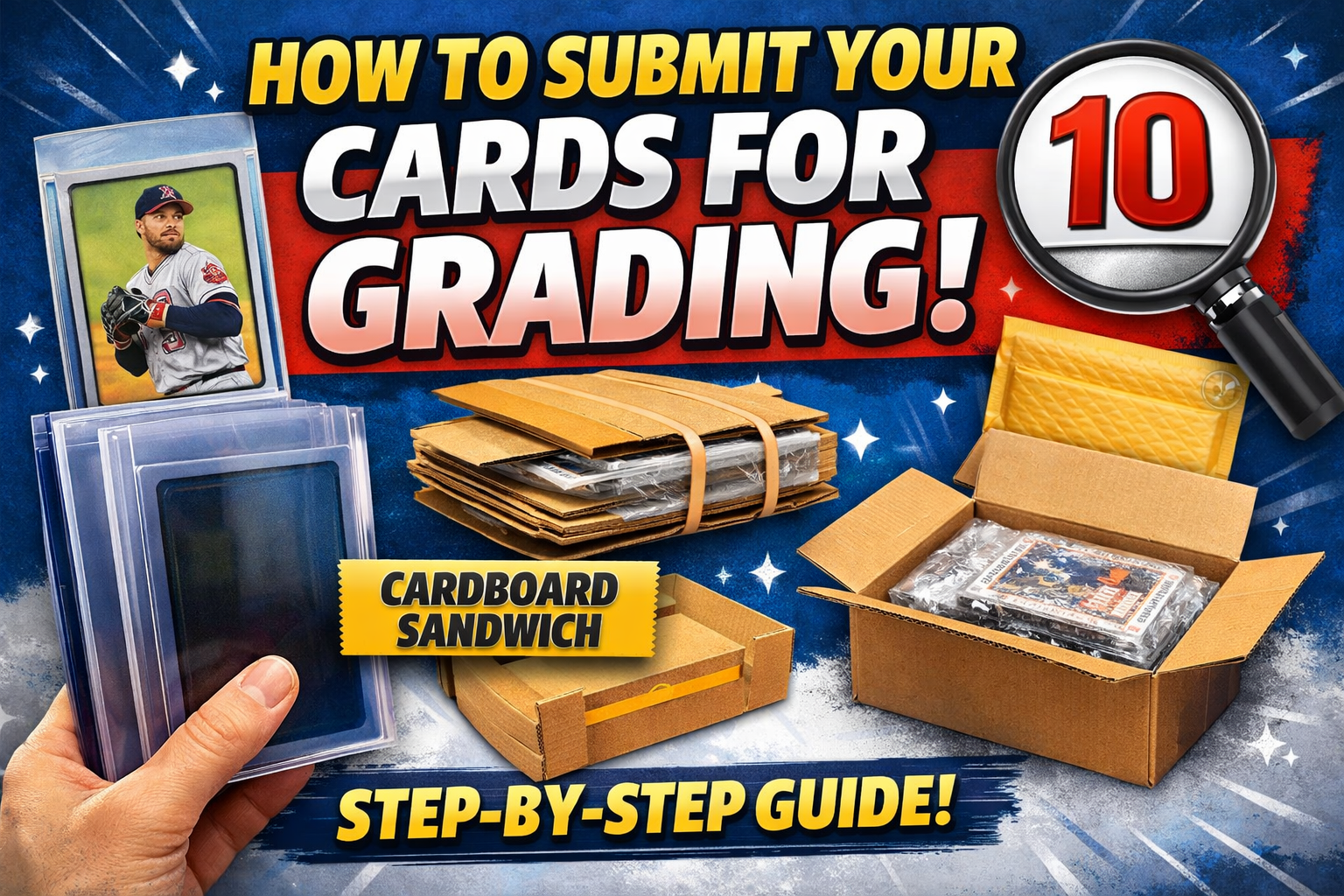
Submitting your trading cards for grading is one of the best ways to protect your cards, increase resale value, and build buyer confidence — but only if they arrive safely.
Improper preparation is one of the most common reasons cards are damaged before they even reach the grading company. This guide walks you through exactly how to prepare and ship your cards correctly, whether you’re sending 1 card or 100 cards.
Before sending your cards, it’s smart to understand how grading impacts resale value and ROI — especially when chasing PSA 10s.
👉 How Grading Impacts Resale Value
Step 1: Clean Hands & a Clear Workspace
Before touching any card:
-
Wash and dry your hands thoroughly
-
Avoid food, drinks, or dusty surfaces
-
Work on a clean, flat surface (desk or table)
💡 Optional: Some collectors prefer cotton gloves, but clean bare hands are perfectly fine.
🔍 Not sure if your card is worth grading?
Use our AI Card Grader to estimate centering, corners, edges, and surface before you submit.
Step 2: Insert Each Card into a Penny Sleeve
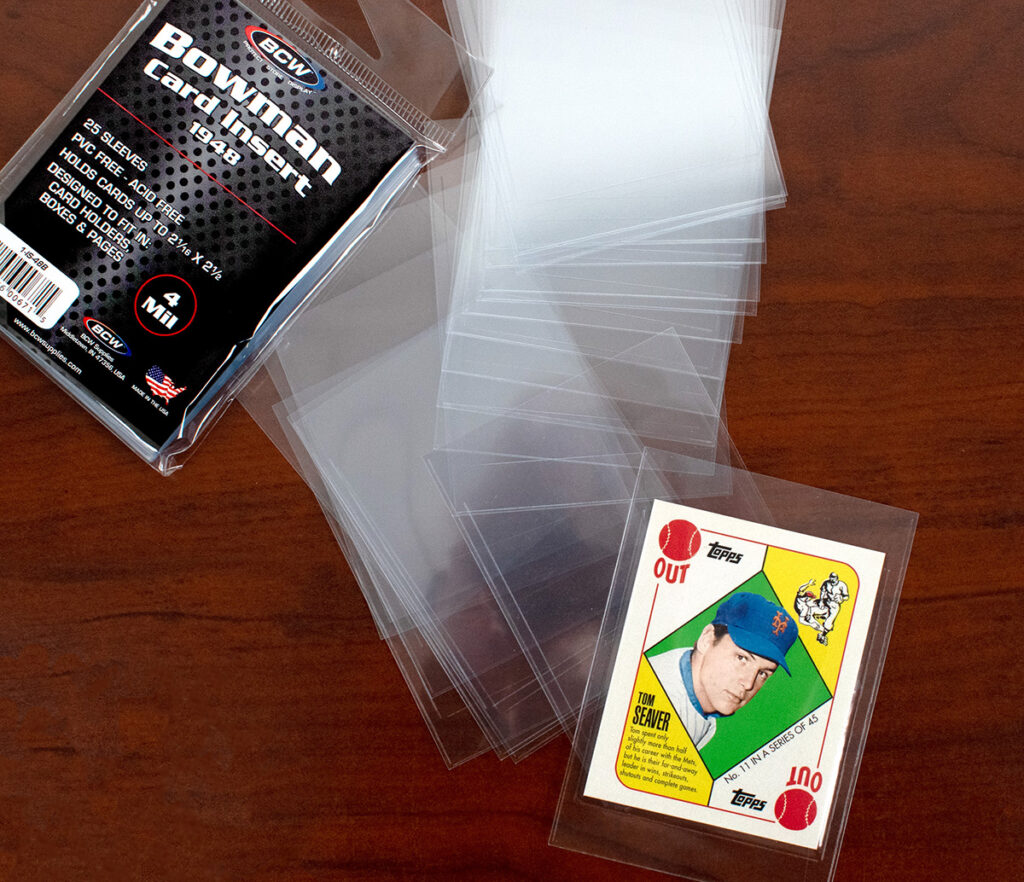

A penny sleeve is the first and most important layer of protection.
Best Practices:
-
Use new, clean penny sleeves only
-
Gently slide the card in — never force it
-
Ensure corners are fully seated
❌ Avoid:
-
Old or scratched sleeves
-
Tight-fit sleeves
-
Pulling the sleeve over the card from the top
Step 3: Place the Sleeved Card into a Card Saver (Semi-Rigid)
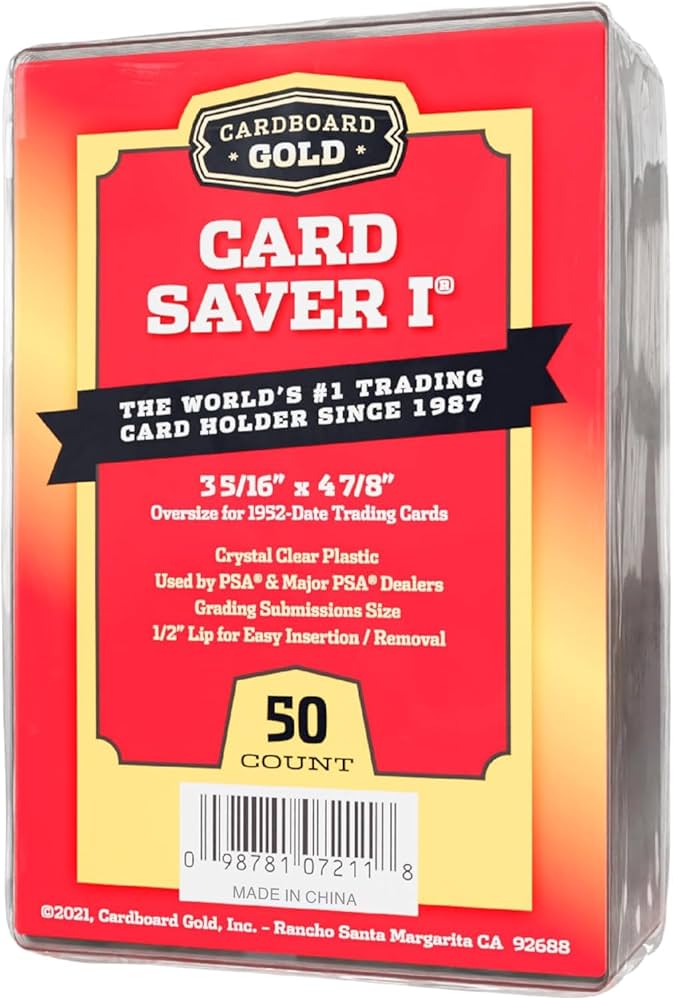

Most grading companies require semi-rigid Card Savers, not top loaders.
Why Card Savers?
-
Easy for graders to remove cards safely
-
Less risk of edge or corner damage
-
Industry standard for submissions
Tips:
-
Slightly open the Card Saver with your fingers
-
Gently guide the sleeved card inside
-
Do not tape the card inside the holder
🚫 Do not use:
-
Top loaders
-
Screw-down holders
-
Magnetic one-touch cases
Proper preparation can be the difference between a mid-grade and a premium slab — especially when resale is the end goal.
Step 4: Stack Cards & Use the Cardboard Sandwich Method


Once your cards are sleeved and in Card Savers, it’s time to secure them.
How to Create a Cardboard Sandwich:
-
Stack your cards neatly (all facing the same direction)
-
Place rigid cardboard on the front and back
-
Use rubber bands to hold everything together
Important:
-
Rubber bands should be snug, not tight
-
Do not allow bands to touch card edges
-
Use thick cardboard (not cereal boxes)
📦 This prevents bending, shifting, and impact damage.
Every corner ding or surface scratch during shipping directly impacts grade — and lower grades mean lower resale prices. Protecting cards properly protects your ROI.
👉 How Grading Impacts Resale Value
Step 5: Choose the Right Shipping Method (Mailer vs Box)
Option A: Padded Mailer (Small Submissions)

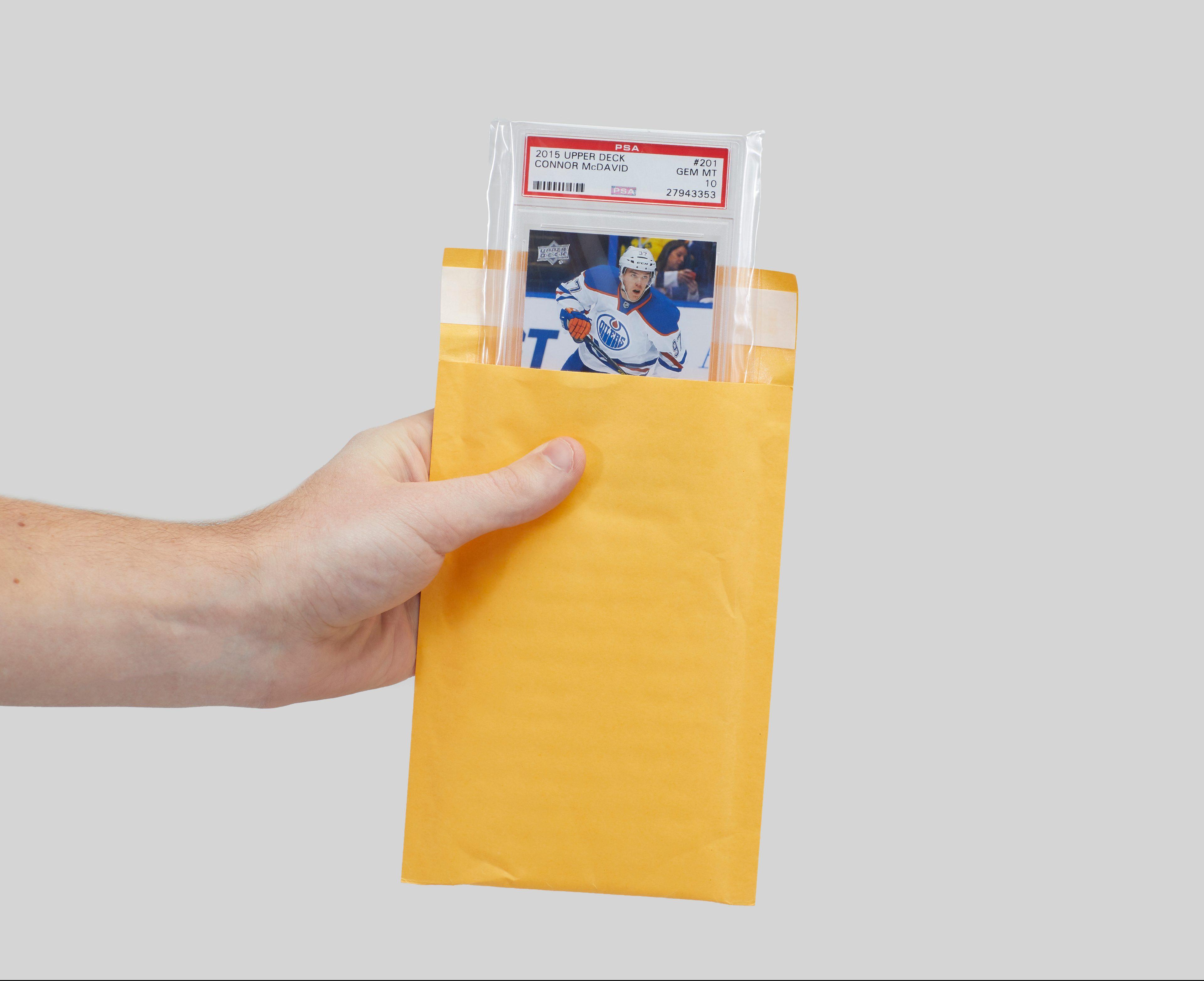
Best for:
-
1–10 cards
-
Short domestic shipping routes
Checklist:
-
Bubble mailer with internal padding
-
Sandwich placed flat
-
No movement inside the mailer
Option B: Box Shipping (Larger Submissions)


Best for:
-
10+ cards
-
High-value submissions
-
International shipments
Checklist:
-
Strong corrugated box
-
Bubble wrap around the cardboard sandwich
-
Fill empty space to prevent movement
💡 Rule of thumb: If it rattles, it’s not packed well enough.
📊 Submitting multiple cards?
Use our AI Collection Value Calculator to see total estimated value and grading upside across your entire submission.
Step 6: Include Submission Paperwork (If Required)
Depending on the grading company:
-
Print and include your submission form
-
Place paperwork on top of the cards
-
Never fold forms tightly around cards
When submitting through Graded Cards Australia, we handle all paperwork for you — just pack the cards securely.
Step 7: Seal, Label & Ship Securely
Before sending:
-
Tape all edges securely
-
Use a tracked shipping service
-
Add insurance for higher-value cards
📌 Always keep:
-
Lodgement receipt
-
Tracking number
-
Photos of packed cards (recommended)
Common Submission Mistakes to Avoid
❌ Top loaders instead of Card Savers
❌ Tight rubber bands bending cards
❌ No cardboard protection
❌ Loose cards inside packaging
❌ Sending without tracking
Avoiding these mistakes can be the difference between a PSA 10 and a downgraded card.
Once your cards are graded, knowing how to list, price, and ship correctly is just as important.
Want a Stress-Free Grading Submission?
At Graded Cards Australia, we:
-
Pre-check cards
-
Prepare and submit correctly
-
Handle PSA, SGC, BGS & CGA submissions
-
Reduce risk and maximise grading results
👉 Submit Your Cards for Grading Today
👉 Use Our AI Card Grader to Estimate Condition
👉 Try the AI Collection Value Calculator to See ROI Potential
Final Tip 🎯
Grading starts before your card reaches the grading company. Proper preparation protects your investment and gives your cards the best possible chance at top grades.
Share and get 15% off!
Simply share this product on one of the following social networks and you will unlock 15% off!